Expert Approach and Industry Application Examples in Waterproofing Product Selection
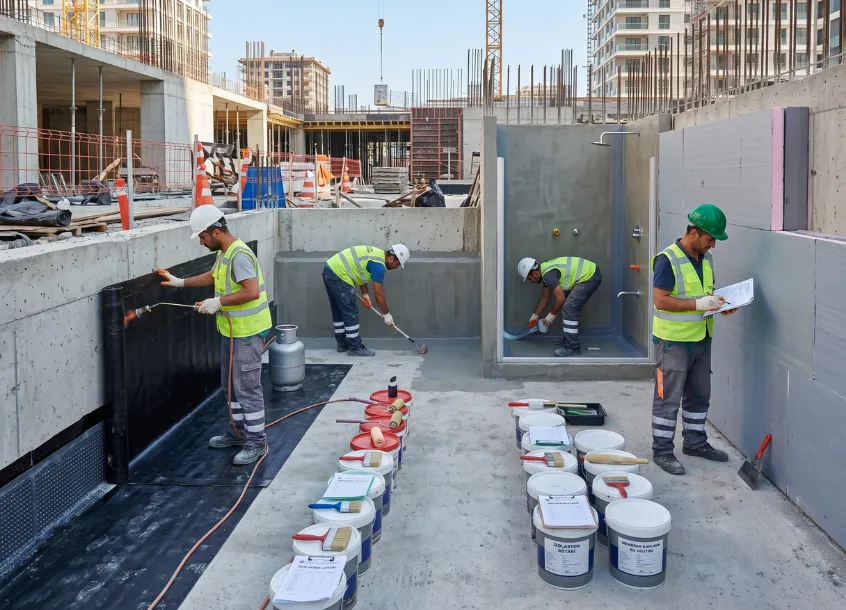
Expert Approach and Industry Application Examples in Waterproofing Product Selection
Waterproofing product selection is a critical process for ensuring that buildings remain long-lasting, safe and durable. Every structure has different insulation needs depending on its purpose of use, climate conditions, type of water exposure, ground structure and application area.
For this reason, waterproofing products should not be evaluated only according to their general features. They should be selected based on project conditions, material compatibility, application environment, technical performance criteria and long-term durability goals. For construction professionals, dealers, flooring applicators, architects and technical teams, choosing the right product directly affects the success of the application.
Analyzing Project Conditions in Waterproofing Product Selection
Not every waterproofing application has the same requirements. Building foundations, terraces, wet areas, water tanks, floor coverings and exterior facade applications all create different technical expectations. Therefore, the project should be analyzed in detail before selecting a product.
For example, water pressure and ground moisture are the main priorities in building foundations, while elasticity, vapor permeability and compatibility with ceramic applications may be more important in wet areas. In industrial floors, mechanical strength, chemical resistance and long-term performance become more prominent criteria.
During the waterproofing product selection process, the structure’s static and dynamic loads, water pressure, purpose of use, surface condition and environmental effects should be evaluated together.
The Importance of Material Compatibility and System Integration
Waterproofing is often not a simple process achieved with a single product. For a successful application, primers, repair mortars, waterproofing coatings, membranes, joint fillers, adhesives and finishing products must work in harmony with each other.
For example, waterproofing products applied after concrete repair must be chemically and physically compatible with the repair materials used. If compatibility is not achieved, swelling, cracking, separation or performance loss may occur on the surface.
In wet areas, a coordinated waterproofing system should be planned together with ceramic, natural stone, joint filler and adhesive products. This approach helps reduce post-application problems and improves long-term durability.
Reviewing insulation products developed for different application areas can make it easier to determine the right product group for proper system integration.
GET INFORMATION ABOUT WATERPROOFING SOLUTIONS
Performance Criteria Specific to the Application Environment
The performance of waterproofing products may vary depending on the conditions of the application environment. Therefore, when selecting a product, the level of water exposure, surface type, temperature changes, humidity level and usage intensity of the application area must be considered.
For products used in wet areas, elasticity, resistance to water pressure and surface compatibility are among the primary criteria. In foundation insulation, technical values such as positive or negative water pressure, ground moisture and adhesion to concrete surfaces are important.
In special applications such as underfloor heating systems, the flexibility of the waterproofing product, its behavior against temperature changes and its compatibility with top covering materials should also be evaluated.
The Impact of Correct Application Technique on Long-Term Durability
Choosing the right waterproofing product is important, but applying it correctly is equally critical for the life of the structure. Surface preparation, product mixing ratio, layer thickness, drying time and application method are decisive for performance.
If there is dust, oil, loose particles or old coating residue on the surface, the waterproofing product may not adhere properly. Therefore, before application, the surface must be clean, solid and prepared according to the product’s technical requirements.
Applying layers too thinly, failing to wait for the required drying time or using the wrong equipment can reduce waterproofing performance. For this reason, applicators should follow the technical data sheets and seek expert support when necessary.
Practical Example: Waterproofing Planning in a Hotel Project
In a hotel project, different areas may require different waterproofing solutions. High water pressure resistant products may be preferred for foundation areas, while elastic coatings, under-tile waterproofing products and joint-compatible systems may be prioritized in bathrooms and spa areas.
For floors, criteria such as usage intensity, exposure to cleaning chemicals and mechanical strength should be evaluated. In such projects, planning the system according to each area instead of selecting a single product provides more accurate results.
This approach shows how important it is to evaluate product selection and application techniques together for application success.
Product Selection for Dealers and Business Partners
Dealers and business partners should balance both technical and commercial expectations during the waterproofing product selection process. Understanding the customer’s application area correctly, recommending the right product for their needs and explaining technical information clearly can directly influence the purchasing decision.
A broad product portfolio, stock availability, technical documentation support and application knowledge provide important advantages for dealers. Helping customers make decisions based not only on price but also on performance and long-term durability strengthens commercial success.
Sustainability and Environmental Compatibility
Sustainability expectations are increasing in the construction industry. When selecting waterproofing products, criteria such as long-term performance, reduced maintenance needs, environmental compatibility and resource efficiency should also be considered.
A long-lasting and correctly applied waterproofing system can reduce the need for early maintenance and repair. This provides a more sustainable result both economically and environmentally.
GET INFORMATION ABOUT WATERPROOFING SOLUTIONS
Technological Developments and Innovative Products
The waterproofing industry is evolving with technological developments that support more durable, easy-to-apply and environmentally friendly products. Flexible coatings, high-performance membranes, special primers and modular application systems can provide more effective solutions for different project needs.
Prefabricated systems and products that simplify application can reduce labor time while making quality control easier. These innovations may offer advantages for construction professionals and architectural teams in terms of both cost and performance.
Practical Checklist for Waterproofing Product Selection
- Has the application area been clearly defined as foundation, roof, wet area, floor or exterior facade?
- Has the level of water exposure and water pressure of the structure been analyzed?
- Has the surface type and current surface condition been evaluated?
- Is the selected product compatible with other building materials?
- Has the application technique and equipment requirement been clarified?
- Have drying time, layer thickness and climate conditions been considered?
- Have technical data sheets and application instructions been reviewed?
- Has long-term durability and maintenance need been evaluated?
Common Mistakes in Waterproofing Product Selection
- Selecting the product only according to price
- Not analyzing the needs of the application area sufficiently
- Neglecting surface preparation
- Ignoring primer and complementary product compatibility
- Not following the application conditions in the technical data sheet
- Applying the next layer before the drying time is completed
- Working on critical areas without professional application support
Conclusion: The Right Product and Correct Application Provide Long-Term Protection
Waterproofing product selection is critical for protecting buildings against water, extending their service life and reducing maintenance costs. More successful results can be achieved when project conditions, material compatibility, application environment, technical performance and application method are evaluated together.
As Isoweir, we offer technical support, product selection guidance and solutions for waterproofing project needs. You can contact expert teams to determine the products suitable for your project and ensure long-term durability.