What Is External Thermal Insulation (ETICS) in Buildings? How Is It Applied?
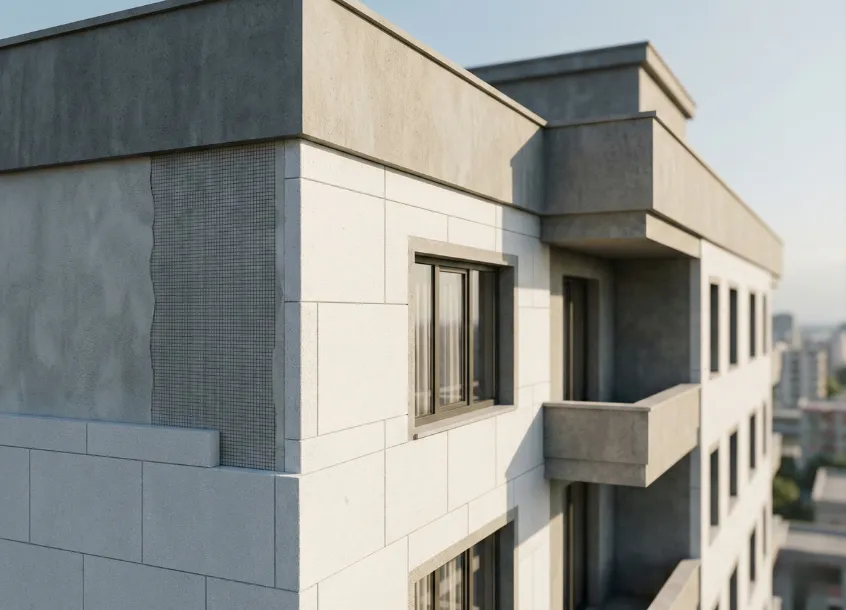
What Is External Thermal Insulation (ETICS) in Buildings? How Is It Applied?
External thermal insulation (ETICS) is the process of reducing energy losses by applying thermal insulation to the exterior façade of buildings while protecting the building envelope against external factors. A properly designed and standards-compliant insulation system not only provides energy savings but also protects the building façade from rain, moisture, wind, and temperature fluctuations for many years.
However, one critical point must be clearly stated here:
External insulation is not limited to insulation boards alone.
This system is a whole consisting of surface preparation, waterproofing, correct material selection, and proper detailing. When this integrity is not achieved, the insulation system quickly loses performance and fails to deliver the expected benefits.
GET TECHNICAL INFORMATION FOR INSULATION SYSTEMS
Why Is External Insulation Applied?
The main purpose of external insulation is to minimize heat losses through the building envelope. However, when applied correctly, the benefits go far beyond this:
- Reduces heat loss in winter and heat gain in summer
- Lowers energy consumption and controls utility costs
- Protects the façade against rain, wind, and UV exposure
- Extends the physical and economic lifespan of the building
- Provides more balanced and comfortable indoor temperatures
In short, external insulation is a strategic investment that secures not only today, but also the future of the building.
However, all these benefits depend on proper system design. Otherwise, insulation remains nothing more than a short-term façade covering.
How Is External Insulation Applied?
A professional insulation application is carried out by following specific technical steps. Each step directly affects system performance.
1. Surface Cleaning and Preparation
Before insulation, the façade is cleaned of dust, dirt, oil, loose plaster, and paint residues. Damaged surfaces are repaired and cracks are filled.
The rule is clear:
No insulation applied on an unstable surface can be long-lasting.
If this stage is skipped, even the highest-quality materials will begin to detach from the façade in a short time.
2. Bonding of Thermal Insulation Boards
Thermal insulation boards (EPS, XPS, mineral wool, etc.) are fixed to the façade using suitable adhesive mortar. At this stage, it is essential that:
- No gaps remain between boards
- A staggered bonding pattern is applied
- The adhesive is evenly distributed on the surface
Incorrect installation leads to thermal bridges and system weaknesses.
3. Mechanical Anchoring
Mechanical anchoring is applied to increase resistance against wind loads, façade movements, and long-term stresses.
This step is critical for the safety and durability of the insulation system. Insufficient anchoring may result in bulging or detachment of façade elements.
4. Reinforced Base Coat Application
A base coat reinforced with alkali-resistant mesh is applied over the insulation boards. This layer:
- Provides impact resistance
- Prevents micro-crack formation
- Strengthens overall façade integrity
The reinforced base coat forms the structural backbone of the insulation system.
5. Final Finish Layer
The system is completed with decorative coatings, exterior paints, or cladding materials. This layer:
- Provides aesthetic appearance
- Protects the façade against UV, rain, and wind
However, it must be remembered: no matter how high-quality the finish layer is, the system will fail if the infrastructure is not properly executed.
The Biggest Mistake in External Insulation: Ignoring Waterproofing
The most common mistake on site is the following:
All focus is placed on thermal insulation, while waterproofing is completely neglected.
However, water and moisture penetrating the façade over time:
- Reduce the performance of insulation boards
- Cause blistering in plaster and paint layers
- Lead to façade cracks due to freeze–thaw cycles
- Significantly shorten the lifespan of the insulation system
Let’s be clear:
Thermal insulation loses its technical meaning once it comes into contact with water.
Why Is Waterproofing Essential Before Insulation and at Detail Points?
Isoweir waterproofing products are applied before insulation and especially at critical detail points such as window edges, parapets, balcony junctions, and floor bands to prevent water ingress into the façade.
This approach ensures that:
- The insulation system remains dry
- Thermal insulation performance is preserved
- Moisture-related façade deformations are prevented
- Maintenance and repair requirements are minimized
Waterproofing is often invisible, but it is the most critical safeguard of the insulation system.
GET TECHNICAL INFORMATION FOR INSULATION SYSTEMS
Long-Term Benefits of External Insulation
The long-term advantages of a properly applied insulation system are clear:
- Significant reduction in energy bills
- Extended façade lifespan
- Minimization of thermal bridges
- Improved indoor comfort
- Increased market value of the building
Applications based on short-term cost considerations always result in higher expenses in the long run.
External Insulation Is a System Solution
External insulation is not just about bonding insulation boards. Real efficiency is achieved when thermal insulation, waterproofing, and correct application discipline work together.
Insulation systems supported by Isoweir waterproofing solutions protect façades not only today, but for many years without problems.
Final word:
If you want to keep the heat inside, you must keep the water outside.